Stemtree of Spring TX: Robotics Classes for Kids—Hands-On Workshops
A quiet street in Spring, Texas, ends at a building that feels like a harbor for curious minds. The sign reads Stemtree of Spring TX, and the moment you step inside you sense the air has a different rhythm. Tools, sensors, and little carts with blinking LEDs sit beside kid-sized workstations. It feels less like a classroom and more like a workshop where imagination is the coin and experimentation the trade.
Over the years I have watched families navigate after school options that feel rich yet practical. The choice often boils down to two things: will the program teach actual skills that transfer outside the room, and will the experience leave my child empowered rather than overwhelmed. Stemtree has carved a niche by anchoring its robotics offerings in hands-on learning while weaving soft skills like teamwork, perseverance, and project planning into every cohort of students.
What makes Stemtree of Spring TX distinct begins with the people who run the place. The instructors come from varied engineering and education backgrounds, which matters because it translates into lessons that respect both the curiosity of a ten year old and the critical thinking demands of a high schooler. They don’t pretend robotics is a magic shortcut to future success; they treat it as a solid vehicle for building problem solving, algorithmic thinking, and engineering literacy. The day I shadowed a session, I watched a teacher guide a group through debugging a line-following robot. The child had wired the motor incorrectly, and the group worked through the issue with calm, concrete steps. They did not rush to a quick fix; they reflected, they tested, and they learned.
Behind every successful workshop there is a framework that keeps things moving without stifling curiosity. Stemtree builds its sessions around small, tangible milestones. A five week module might start with a simple chassis assembly, move into circuit basics, progress to sensor integration, and finish with a collaborative project that solves a real problem. The arc is deliberate but flexible enough to accommodate a child who arrives on day one confident about gears and another who arrives with questions more than answers. The aim is not to produce prodigies in a single season, but to cultivate a mindset that sees a problem as a collection of solvable parts.
The Spring TX location is purposefully designed for learning on demand. Tables are arranged to encourage collaboration, but there are quiet corners for troubleshooting one-on-one with a mentor. Tools are stored within easy reach, yet safety protocols sit front and center. The space itself communicates a philosophy: mastering robotics is as much about discipline as it is about devices. Children learn to prepare a workspace, organize components, and document their process. The classroom becomes a microcosm of a professional lab, where careful planning and clear communication are as important as clever code.
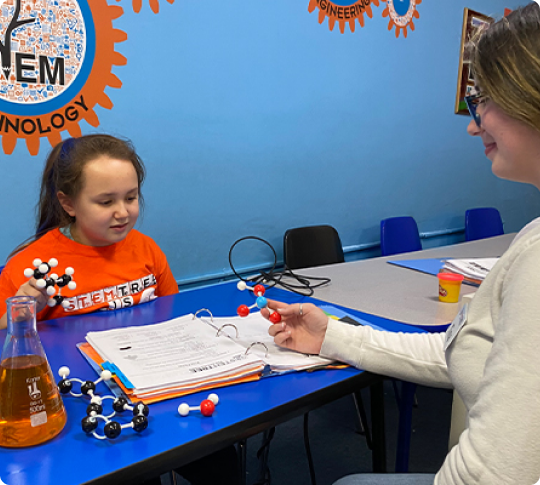
The curriculum at Stemtree of Spring TX is not one-size-fits-all. It respects the pace of each learner while maintaining a shared rhythm so that groups can advance together. Some sessions emphasize the hardware side of robotics—assembling modular robot kits, customizing chassis configurations, and testing motor responses. Others lean into software—driving robots through obstacle courses, coding basic routines, and refining program timing to achieve precise movements. The instructors frequently weave in real world contexts. A project might simulate warehouse logistics or rescue missions where a robot must navigate debris and communicate with teammates. These scenarios feel authentic rather than contrived, which keeps students engaged and makes the lessons memorable.
What does a typical workshop look like? It isn’t a single epic moment of triumph followed by a victory lap. It is a tapestry of small wins that accumulate into broad skill sets. The day often begins with a quick diagnostic: what did last week’s session leave unfinished? This review is not punitive; it’s a chance to connect the threads from prior weeks to today’s task. Then comes a hands-on phase where students assemble, wire, program, and adjust. In the middle, there is usually a touch of collaboration—pairs trading responsibilities, sharing debugging tips, and presenting a short progress report to the group. Finally there is a reflective end where students articulate what worked, what didn’t, and what they would change next time. It’s surprising how often a simple question like, Why did this sensor misbehave under certain lighting conditions? Yields a cascade of learning that sticks.
A recurring theme across families I spoke with is the balance Stemtree achieves between challenge and support. The workshops are not watered down. Students encounter meaningful problems that demand tinkering, iteration, and persistence. Yet the staff maintains a steady, patient presence that prevents frustration from curdling into disengagement. When a student struggles, mentors don’t rush in with a ready-made fix. They pose guiding questions, offer tool tips, and demonstrate a workaround that invites the learner to own the solution. The goal is to cultivate ownership over the process as much as the outcome. That is a subtle but powerful difference from more traditional, teacher-led classrooms where correct answers can feel like the only currency.
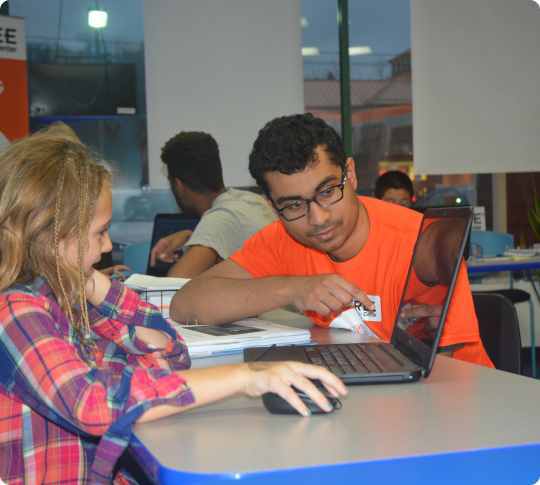
For parents, the value proposition often centers on tangible outcomes. Robotics programs naturally introduce elements of coding, circuitry, and mechanical design, but Stemtree tends to surface a broader set of competencies that matter well beyond the workshop wall. Students learn to read schematics, interpret timing diagrams, and plan a sequence of actions with clear logic. They gain practical experience with troubleshooting, which develops resilience rather than reliance on a single instructor or a line of prewritten code. They learn to work as part of a team, to listen to each other’s ideas, and to contribute a piece of a larger project. These are the behaviors that pay off when a child returns to a classroom, a science fair, or a weekend hackathon with friends or siblings.
One of the reasons families return year after year is the ongoing scope and progression of the program. The Spring TX location frequently revises its offerings to align with evolving technology and growing student capability. A younger cohort might spend weeks orienting to sensors, basic motor control, and simple line tracking. Older students increasingly tackle autonomous navigation, multi-robot coordination, and more sophisticated coding environments. The progression feels natural, not forced. It respects what a student has already absorbed, then gently extends those competencies toward more ambitious projects. It is common to see a student who started with a straightforward obstacle course finish a module on autonomous line following by designing a robot to collect and sort tiny objects by color.
Beyond the core workshops, Stemtree adopts a broader community mindset. There are regular showcases where students demonstrate their robots to families, peers, and mentors. These demonstrations are not meant to be a performance; they are an occasion to reflect on the journey, share learnings, and celebrate incremental gains. Parents often tell me how these showcases become a milestone, a moment to observe the tangible fruits of several weeks of effort. The sense of community that grows from these events can be as valuable as the technical skills themselves. Students cheer for each other, offer constructive feedback, and cultivate the kind of social skills that will serve them well in any team setting later in life.
The practicalities of participation matter as well. After school hours tend to fill up with a variety of obligations—homework, sports, music lessons, and family time. Stemtree’s scheduling generally aims to integrate smoothly with these demands. The classrooms are designed to be accessible after a long school day, with supportive staff who understand fatigue and the need for reasonable pacing. For families weighing the commitment, it helps to consider a few realities: the time investment is not trivial, and the return is cumulative rather than instantaneous. A single workshop may not deliver a dramatic breakthrough, but over weeks and months students accumulate confidence and a practical toolkit they can apply to new problems. In some cases, teenagers who were initially hesitant about robotics become the ones who propose collaborative projects, mentor younger students, and take ownership of parts of the curriculum.
An important point to acknowledge is the edge cases that come with any hands-on engineering program. Not every child will love every module equally, and not every project will click. Some learners respond particularly well to hardware challenges, while others connect more deeply with the software, logic, or storytelling aspects of a project. Stemtree seems to recognize this natural variation and offers pathways that allow students to lean into their strengths. There are always alternative routes to a meaningful outcome. If a student struggles with the fine motor skills required to assemble a tiny wheel module, a mentor might pivot to a related task that still builds confidence and knowledge, such as wiring or sensor calibration. The flexibility is not a loophole; it is an intentional design choice to keep motivation intact while still pushing boundaries.
Parents and educators often wonder about the long-term benefits of robotics programs for kids. A well-timed exposure to robotics can spark lasting interest in science, technology, engineering, and math. The iterative approach embedded in Stemtree classes reinforces a mindset that values process as much as product. In the real world, the ability to dissect a problem, hypothesize a strategy, test a solution, and pivot when results slam into reality is more valuable than memorizing a sequence of steps. The robots become a kind of narrative device—the tangible medium through which children narrate their own problem solving, collaboration, and persistence. When students articulate their design choices during brief presentations, they practice clear communication, a skill essential in any discipline.
If you are a parent deciding whether to enroll your child in robotics classes at Stemtree of Spring TX, you will likely want to hear about a few practical considerations that influence outcomes in real life. First, what is the class size and how experienced are the instructors? A smaller cohort often translates into more individualized guidance, while experienced mentors can manage multiple moving parts without sacrificing the warmth of the learning environment. Second, what does a typical week look like? It helps to know how much hands-on time the students receive versus time spent on theory or documentation. This balance matters because it shapes how quickly a child can move from simply following a set of instructions to creating their own designs and strategies. Third, what is the path forward for a student who wants more challenge? The strongest programs offer a clear ladder of opportunities, from entry level workshops to more advanced projects or even mentorship roles for older students.
The role of play in robotics education is often underestimated. Play is not the opposite of learning in these classrooms; it is a critical engine of engagement. When children experiment with different sensor configurations or toy car chassis, they learn how physical properties like friction, traction, and inertia influence outcomes. They learn to anticipate consequences, revise strategies, and appreciate the value of trial and error. The playful dimension makes the rigorous learning visible in a way that simple worksheets cannot. It is in the late afternoon hum of a workbench, the squeak of a chair as someone shifts position to observe a sensor reading, and the triumphant chorus when a robot completes a tricky navigation task that the true story of Stemtree’s impact unfolds.
For families weighing after school stem programs, Stemtree of Spring TX offers a thoughtful blend of structure and exploration. The lessons are anchored in engineering fundamentals, but the delivery honors the unpredictable energy of kids. The environment rewards curiosity, not simply correctness. In my experience, the strongest moments come when a student who initially struggles finds a footing and then pays that knowledge forward. The lab becomes a bridge—not a barrier—between the classroom and the real world, where the child can see the outcome of careful design and collaborative effort.
A final reflection on the lived experience of these workshops centers on growth over time. When I speak with long-term participants, the recurring theme is not a single flashy project but a durable sense of competence. The child learns to manage projects, to break down complex tasks, and to communicate progress with a team. They learn to estimate timelines, track milestones, and adjust their plan as new data appears. These are not skills that disappear the moment a module ends; they carry forward into school projects, science fairs, and even personal tech hobbies.
Stepping back, what makes Stemtree a compelling option for families in Spring TX is not only the specific content of the robotics lessons discover more but the philosophy of learning underpinning the program. The team treats robotics as a language kids can use to parse the world around them. They emphasize hands-on practice, reflective dialogue, and a collaborative spirit. They acknowledge that failure is part of learning and model how to recover gracefully, analyze the error, and try again with more insight. The approach resonates with parents who want their children to grow resilient, curious, and capable of turning ideas into tangible outcomes.
If this sounds like the kind of environment you want for your child, consider a simple way to start. Observe a trial session, chat with a mentor about your child’s interests, and ask about the progression from beginner to more advanced modules. Notice how the staff respond when your child asks an unexpected question or reveals hesitancy about a task. A strong program will welcome curiosity and guide it with clarity rather than pressure. The right partnership between family and Stemtree can open doors to a year of learning that feels meaningful, enjoyable, and surprisingly practical.
Two practical snapshots from the field illustrate the spectrum of experiences at Stemtree of Spring TX. A younger learner, new to robotics, may begin with a basic chassis build, a handful of simple circuits, and a line-following challenge. The goal is not to assemble something flashy on day one, but to demystify the process of moving a robot from thought to action. The instructor offers gentle scaffolding: check the battery connection, verify the motor direction, and explain why a certain sensor reading is off. The child leaves with a sense of accomplishment and a concrete next step. In a later module, that same learner might step into a more ambitious project that involves autonomous navigation through a maze, color sensing, and a basic decision tree that determines the robot’s behavior based on sensor input. The growth is visible not only in capability but in confidence and curiosity about what lies beyond the next corner of the lab.
For an older participant, the arc often accelerates. A teen who enters with some programming exposure might tackle a multi-robot challenge that requires coordination between units, data sharing, and a shared codebase. They learn to debug not only their own robot but also how to read another student’s code, negotiate a solution, and merge changes in a way that keeps the team moving forward. The project might culminate in a showcase where the team demonstrates how their system adapts to a changing environment, such as a simulated warehouse scenario with variable obstacles. It is in these moments that the program’s emphasis on collaboration and communication becomes as important as technical prowess. Parents watching such a presentation often see their child move beyond the mechanics of robotics into the realm of design thinking and collaborative leadership.
In the end, Stemtree of Spring TX is less about a single workshop and more about a sustained journey through engineering practice, teamwork, and problem solving. It is a space where kids learn not only to build and code robots but to articulate their ideas, diagnose issues, and contribute meaningfully to a shared enterprise. That combination—technical skill, collaborative habit, and reflective thinking—creates a foundation that can serve students long after they join their first robotics module.
If you are weighing this program against other after school options, here is a concise perspective to guide your decision. The value lies in the fermentation of curiosity into capability, the shift from solitary tinkering to shared engineering, and the quiet confidence that comes from completing a project that matters to the group. The potential trade offs are real too: time commitment, occasional frustration with a stubborn bug, and the natural variability in how quickly a child absorbs new concepts. Yet the net effect is rarely neutral. The children I have seen emerge from Stemtree sessions carry with them a practical toolkit that strengthens not only their grasp of STEM ideas but their capacity to engage with teammates, handle feedback, and persevere through a challenge.
Two short checks you can use when evaluating a program like Stemtree help separate the signal from the noise. First, observe how mentors frame problems. Do they present challenges in bite sized, solvable steps or do they rely on a quick fix? The former tends to cultivate independence and resilience, the latter can create dependency. Second, listen for opportunities to apply learning outside the lab. A strong program will connect robotics concepts to real world contexts, or at least provide guidance on how a child can continue exploring at home or in school clubs. If these conditions exist, the program has more than just technical potential; it offers a pathway to ongoing growth.
In the end, the doors open not only to understanding how a robot works, but to understanding how a curious, capable mind works. Stemtree of Spring TX crafts an environment where kids move from passive observers of technology to active makers of it. They learn to ask questions, to test ideas, and to revise their plans in light of evidence. They learn to celebrate small wins, to support teammates when a plan falters, and to keep moving toward a solution even when the path is bumpy. That is a lasting education, one that prepares children to navigate a world where technology is not a distant future but a daily companion.
If this resonates with your family values and your child’s temperament, consider scheduling a visit or a trial session. Talk with the instructors about your child’s interests, the goals you have in mind, and the pace at which your child typically learns. The decision to enroll is not merely about robotics capability; it is about joining a community that treats experimentation with seriousness and joy alike. Stemtree of Spring TX aligns with families who want an approach to STEM education that is grounded in real practice, attentive mentorship, and a belief that kids learn best when they are actively building, testing, and sharing what they discover.
Two quick points to keep in mind as you plan your next steps. First, consistency matters. Regular attendance helps students accumulate skills and retain motivation over weeks and months, which is essential in a field that builds on prior concepts. Second, documentation and reflection amplify impact. Encouraging your child to keep a simple journal of what they built, what worked, and what didn’t can strengthen the learning cycle and create a personal record of growth. If you can pair a home session with a weekly studio visit, you may discover the sweet spot where skill development accelerates while the experience remains enjoyable.

Stemtree of Spring TX stands as a resilient option in a landscape crowded with after school programs. It brings together the tactile thrill of building with the disciplined clarity of engineering practice. The result is a learning environment that feels both rigorous and human, a rare blend that helps children see themselves as capable explorers of a future shaped by technology rather than passive consumers of it. For families seeking a meaningful hands-on robotics experience for kids, this program offers more than activities. It provides a pathway to confidence, collaboration, and a durable curiosity that they can carry into school, into clubs, and into their own lifelong journeys of making.